

Howard Gardner, a researcher at Harvard University, had a very different view of what amounts to intelligence. His studies of artistically gifted children and people suffering from brain injuries revealed a rich diversity of the ways in which the brain can excel. In his landmark

Posts by Andy Hunter
Molding Your Mind: An Interview with Dr. Elkhonon Goldberg

Most people understand that we can go to the gym to change the structure of your body. But relatively few people understand in a deep sense that our mind can also be molded through the nature of our mental activity.
Three Brain Rules You Need to Know
“The good thing about scientific empiricism is that you can turn a guess into actual data,” says Dr. John Medina. There are too many mythologies out there, like ‘You only use 10 percent of your brain’ — that’s a myth; ‘There are right- and left-brain personalities’ — that’s a myth;
Stroke of Genius: An Interview with Dr. Jill Bolte Taylor
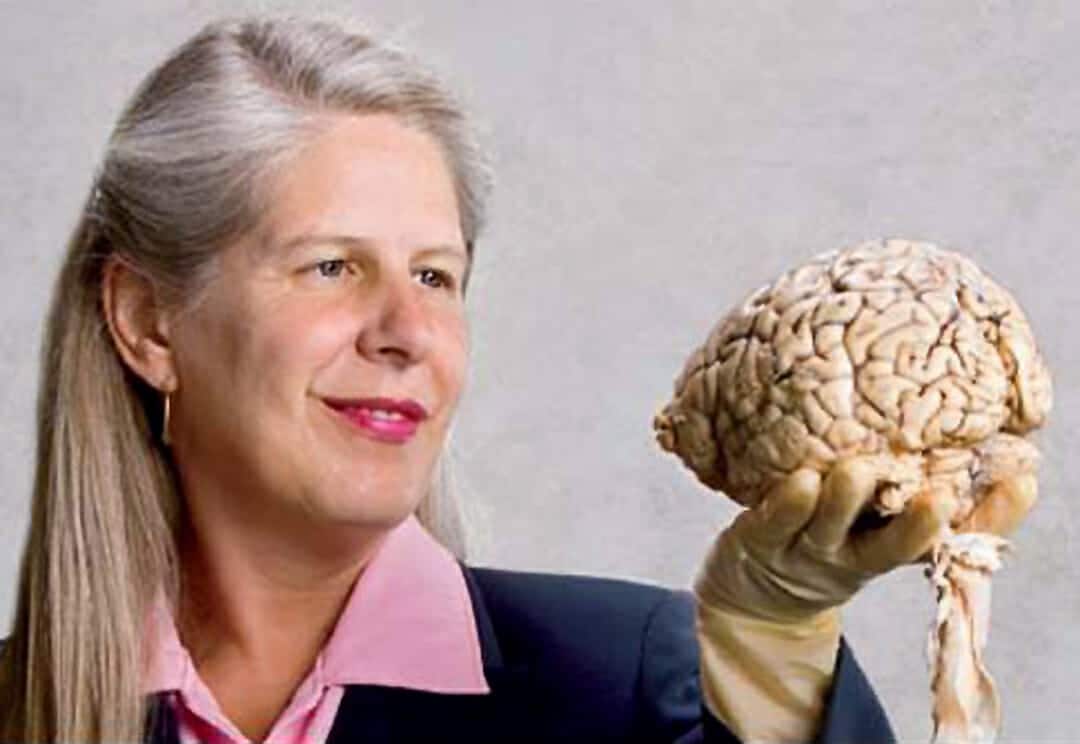
It’s an understatement to say that for nearly all stroke survivors, a stroke is a negative experience. A blood vessel bursts inside your brain and blood fills the surrounding area, choking off millions of delicate neurons. Strokes can damage language centers, motor skills, and memory, depending on the
Call in the (Cognitive) Reserves!

How many paths does your brain have? Our thoughts run across a massive, diverse network of synaptic pathways, with trillions of synapses that form a staggering number of possible connections. Every human brain has more potential synaptic combinations than there are atoms in the universe
Music and the Mind: An Interview with Neuroscientist Daniel Levitin

Daniel Levitin’s life has been a strange one. Perhaps that’s one reason why it’s so entertaining to read his books, which are mixtures of cutting-edge neuroscience and good-natured storytelling. A studio musician and engineer, Levitin played with musicians from the Grateful Dead to Chris Isaak before
On The Threshold: An Interview with Dr. Elkhonon Goldberg

Elkhonon Goldberg is one of those rare scientists who are able to distill complex ideas into accessible, entertaining, and even literary prose. His books “The Wisdom Paradox” and “The New Executive Brain” are as compulsively readable as they are insightful and instructive.
It’s All In Your Mind? What the Placebo Effect Tells Us

In the 17th century, something amazing happened in Western medicine: Anton van Leeuwenhoek of Holland invented the microscope and discovered the biological nature of disease. Once a scientific basis for illness had been identified, the effectiveness of treatments could be observed and measured for the first time.
Arts and Music Education for Everyone: Its Manifold Benefits

Say your child has been having problems in reading and math. Should you hire a private tutor, or enroll your son or daughter in a music class? According to the results of a three-year study called “Learning, Arts, and the Brain,” the surprising answer may be: both.
A (Very) Brief History of Neuroscience

The great Greek philosopher and scientist Aristotle believed that our consciousness, imagination and memory was rooted in the human heart. It was a belief he shared with the ancient Egyptians, whose Book of the Dead endorses carefully preserving the heart of a mummy, but recommends scooping out and discarding the brain.
Battle of the Brains!
THE BRAIN BEE TESTS STUDENTS’ KNOWLEDGE OF NEUROSCIENCE