

What Is A Brain Wave?
Your brain is composed of neurons, which deliver information to other neurons. In the process, they generate electrical changes, which gathers and generates brain waves. Their frequency is a reflection of your brain activity, which can be measured by an electroencephalogram (EEG). Generally, there are four types of brain waves.
Beta Waves (15 to 30 Hz)
This is your brain’s rhythm in the normal, wakeful state associated with thinking, conscious problem-solving, and active attention directed toward the outside world. You are most likely in the “beta state” while you are reading this.
Alpha Waves (9 to 14 Hz)
When you are truly relaxed, your brain activity slows from the rapid patterns of beta into the more gentle waves of alpha. Fresh creative energy begins to flow, fears vanish, and you experience a liberating sense of peace and well-being. The “alpha state” occurs in meditation when you begin to access the wealth of creativity that lies just below our conscious awareness. It is the gateway that leads into deeper states of consciousness.
Theta Waves (4 to 8 Hz)
Found in even deeper relaxation, sleep, and meditation, the “theta state” is where brain activity slows almost to the point of sleep. Theta brings forth heightened receptivity, flashes of dreamlike imagery, inspiration, and, sometimes, your long-forgotten memories.
Delta Waves (1 to 3 Hz)
This slowest of brain wave activity is found during deep, dreamless sleep.
Can You Regulate Your Brain Waves?
Yes, you can! The frequency of your brain waves changes when you change your consciousness and patterns. You can even regulate your neurological activity through training. Simple movement, for example, shaking your head from side to side, can immediately alter the state of your brain waves.
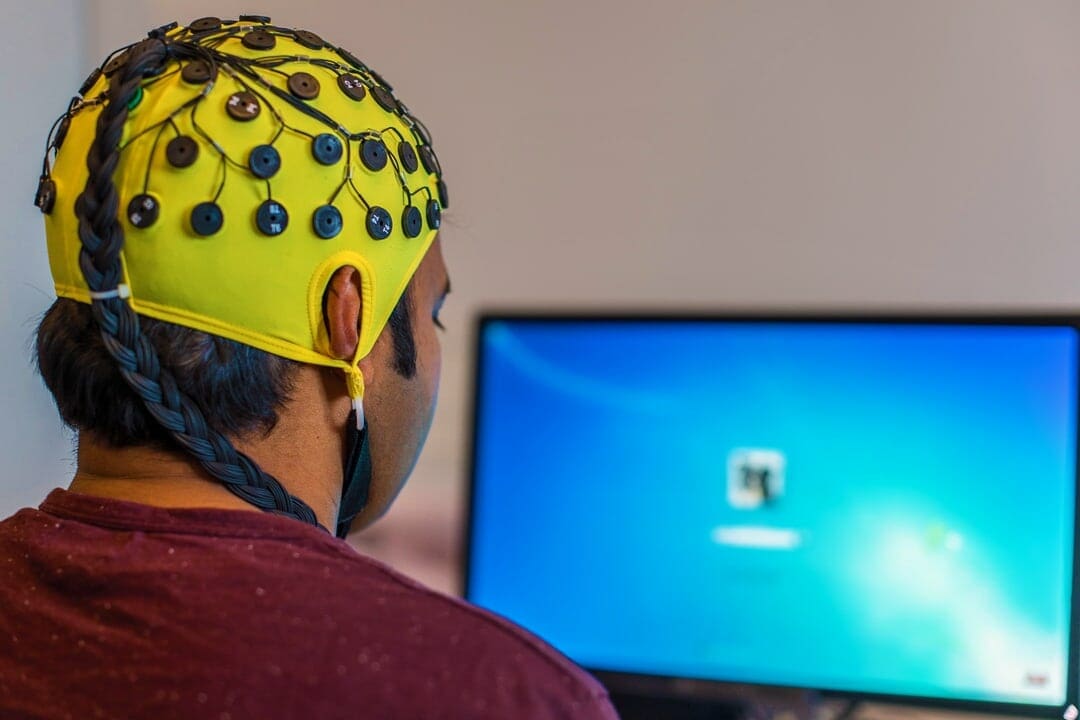
Brain waves can also be self-regulated through neurofeedback, using equipment connected to an individual with sensors that are placed on the scalp and ears. Once connected, a person’s neurological activity can be observed on a computer monitor. They are then taught to play computerized games using their brain wave activity. Changes in neurological activity are then fed back to the individual through visual or auditory information by a computer. Gradually, subjects can learn how to regulate their brain waves.
Researchers have long recognized that certain illnesses, such as epilepsy, produce distinctive neurological patterns. It is theorized that neurofeedback can be utilized to reset these patterns — so that your brain can perform at optimal levels.
These days, there is a lot of research being done on interfaces between the brain and computing technology. Researchers are developing systems that allow you to play games and musical instruments — or even type a keyboard with your brain waves. You can even buy games powered by your brain waves at many toy stores.
This article is updated from its initial publication in Brain World Magazine’s print edition.
More From Brain World
- Change Yourself, Change The World
- Creative Listening: How Music Can Boost Your Creativity
- Finding the Rhythm of the Universe Through Movement and Music
- Guiding Meditation: An Interview with “Brain Whisperer” Kelly Howell
- Know Your Brain: Create Models and Getting A Look Inside
- You, Rewired: How New Technologies Can Impact Your Sense of Self


+Wave)
+Wave&description=&image=https://brainworldmagazine.com/wp-content/uploads/2017/10/Brainwave-572x381.jpg)