
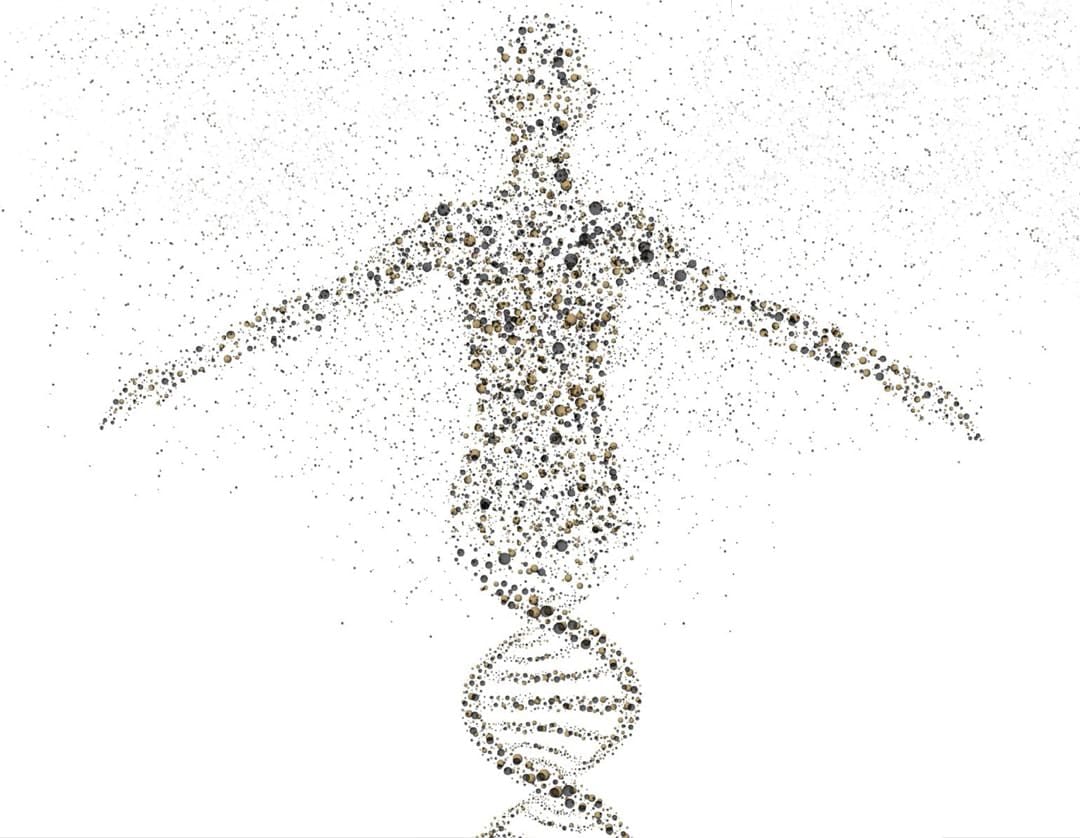
The discovery and description of DNA earned scientists James Watson, Francis Crick, and Maurice Wilkins the 1962 Nobel Prize. Their pioneering work in genetics changed the way we saw life and provided a basis for understanding the evolution of all species, including our own. It seemed that life as we knew it had suddenly been laid out before us as a perfect blueprint. Little did we know that there was an entire new field that would emerge from where Watson, Crick, and Wilkins left off.
Now, the study of epigenetics is illuminating more of the intricacies of how our genes affect, and are affected by, our life. “Epi” comes from Greek, meaning “upon,” “over,” or “near,” so epigenetics is the study of mechanisms “on top of” or “near” the classical mechanisms that affect gene expression. In particular epigenetics looks at how genes are activated or suppressed not by changes to the underlying DNA sequence but by dynamic processes connected to our everyday choices and experiences.
Why is this so important? Aside from advancing the ability to diagnose and treat diseases that originate in our genome, epigenetic research shows we have a greater potential to affect who we are, how we are, and even what we are. The phrase “it’s genetic,” no longer means something is determined by forces beyond our control. In fact, epigenetics suggests that what happens in our bodies and what we pass on to our children could be very much a result of how we use our brains and bodies.
First, let’s take a moment to summarize the “classical” mechanism of genetic change — it’s the mutation, deletion, or insertion of DNA into the genome. Mutations occur randomly over time. Deletion and insertion can also accrue over time and may be accelerated by environmental factors, but they typically occur slowly.
Epigenetic mechanisms, however, alter the way genes are expressed without changing the underlying DNA structure. Some of these mechanisms include DNA methylation and histone modification, two processes that can be triggered by immediate environmental as well as experiential stimuli — reinforcing that we are at least in part, products of our own environment. They can be passed on to future generations, and these mechanisms can even reverse back to a former state over time. This means evolution has the potential to proceed much more quickly and in different directions than we once imagined.
How do our brains affect these epigenetic mechanisms? In The Scientist, Hannah Waters reviewed a study showing how exercise activates epigenetic processes that help prevent the onset of Type 2 diabetes. Researchers suggest it is possible to change your genome and manage the body’s metabolism through lifestyle practices such as exercise — so that effectively we may not need to deal with illnesses in the first place.
So, use your brain to make positive choices and you just might end up changing your DNA in a positive way. Make some not so positive choices, however, and you run the risk of throwing your gene expression into chaos. Scientists are investigating evidence that epigenetic changes could explain the link between alcoholism and the development of liver cancer, fetal alcohol syndrome, and brain pathologies associated with alcohol abuse.
Intellectually, epigenetics is a way to bridge the gap between two different viewpoints of evolution — the force of “nature,” referring to physical changes in the DNA sequence caused by classical mechanisms, and the force of “nurture,” which takes into account life experiences and environmental factors.
Interestingly, epigenetics has revived interest in a somewhat discredited evolutionary theory known as Lamarckian inheritance. Lamarckism, which predated Charles Darwin by almost a century, suggested that the behavioral adaptations made by an organism during its lifetime — such as a giraffe consistently stretching its neck to reach the leaves at the top of a tree — would result in an increased tendency toward long-necked offspring in future generations. Whereas classical evolutionary theory, based on DNA sequence changes, couldn’t provide any means to explain this “acquired-trait” inheritance, epigenetics provides an understanding of the mechanisms that make it, or something like it, possible.