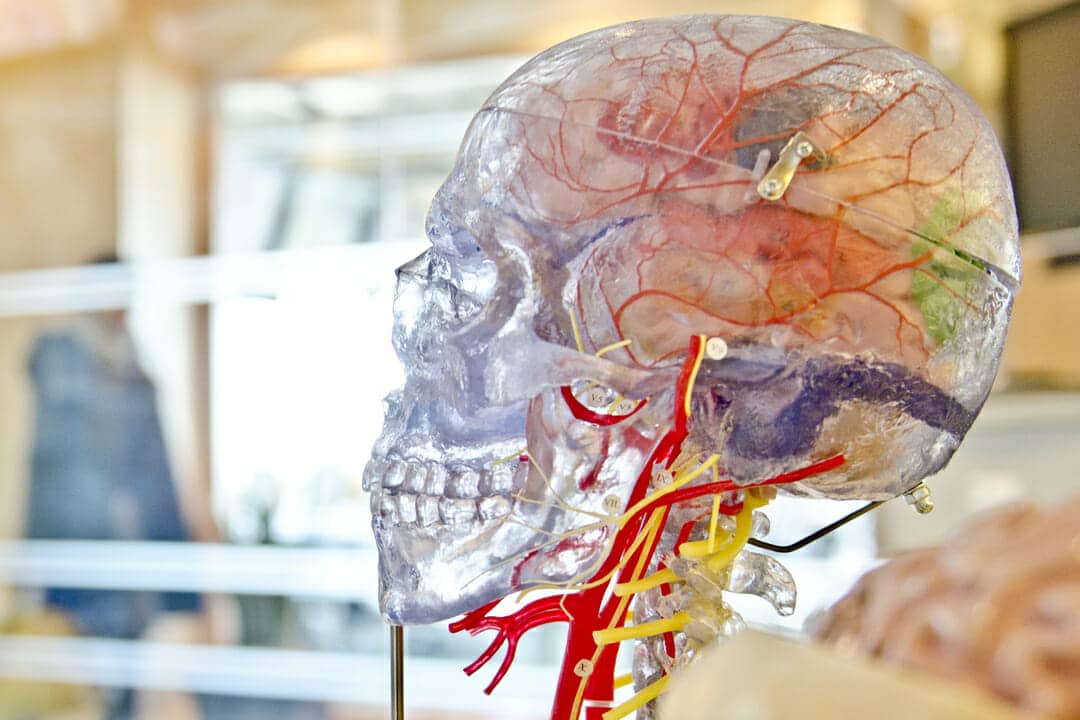

Whenever we think of the human brain, it becomes far too tempting to just imagine the entire organ having clearly mapped regions that individually process each piece of data that comes in and file everything according to function, and not to think of the whole as being greater than the sum of its parts — that the brain relies on vast, working systems to carry out each of its functions in ways that rely on brain circuitry that crosses between its various regions. The reality is hardly anything like the “left brain-right brain” oversimplification we often subscribe to.
Back in 1929, Dr. Hans Berger, inventor of the electroencephalogram, was the first serious researcher to suggest that the human brain is constantly at work, even if the individual is asleep — and despite not being taken seriously by scientists at the time, he even showed electrical oscillations in his papers to prove it. It wouldn’t be for another 65 years before his ideas would be reinforced by Dr. Bharat Biswal, then a graduate student at the Medical College of Wisconsin in Milwaukee, who used functional MRI technology to discover that the brain’s sensorimotor system worked in synchronicity with other regions of the brain, even as patients were asleep.
Dr. Marcus E. Raichle would later describe this phenomenon as a “default mode,” after his experiments showed that the brain consumed just under 5% of the energy it typically consumed when performing a mental task, therefore even when the brain was at rest, it was engaged in high levels of activity. By the end of the decade, researchers had discovered several networks that became activated when the brain was at rest — utilizing visual and auditory parts of our brain when we dream, for example. One network, however, engages while we are not only at rest, but also when performing a goal-directed task and has emerged as a widely studied aspect of neuroscience: the default mode network (DMN).
A Sense Of Self
The default mode network is hardly a term you’d think of when it comes to understanding your own brain, yet many neuroscientists suspect that this bundle of neurons wired throughout the brain’s medial prefrontal cortex, extending into the posterior cingulate cortex, precuneus, and throughout the angular gyrus, may be where we get our sense of self from. It’s the reason we become immersed in an intriguing suspense film or an engaging novel — as the brain takes in visual cues and auditory cues that the brain can process into words and images and conjure our past experiences.
The default mode network becomes active when we rest passively and when our mind wanders, two times when we are likely to either have our minds on someone else or to fall back to reminiscing our own past, possibly even looking at the future outcome rather than the task we are doing at the moment. Electrocorticography studies have also demonstrated that the default mode network is turned on just a fraction of a second after you complete a given task — even if it’s one as simple as reaching out for a nearby object.
Taking Off And Landing
Though the default mode network is an abstract system, it can play a role in shaping the brain — something that recent research has shown in a rather dramatic way. Pilots display a different pattern of functional connectivity in the brain, according to new research conducted in China. The new studies examined interactions and synchronized activity between different areas of the brain, and the findings suggest that pilots tend to have enhanced cognitive flexibility compared to their nonflying counterparts.
“Civil aviation is a distinctive career. Pilots work in a complex, dynamic information environment. They must be aware of all the relevant information regarding this environment and recognize their meaning and importance,” write the authors of a recent study that was published in the journal PLOS One.
Considering the nature of the mental workout pilots face on a daily basis, the researchers predicted that their brains would show different degrees of brain connectivity from their nonpilot counterparts. In their study, the researchers made use of resting-state functional magnetic resonance imaging, a widely used tool for investigating spontaneous brain activity, to look at the neurocognitive networks of 26 pilots and 24 nonflying individuals as a control group who had congruent levels of education.
Fourteen of these pilots were employed as flight instructors at the Civil Aviation Flight University of China. The other 12 were first officers for commercial airlines. Compared against the control group, the pilots displayed a decrease in functional connectivity within the brain’s central executive network and an increase in the functional connections between the brain’s central executive network, the salience network, and the default mode network.
The drop in connectivity occurring in the brain’s central executive network is important, as it determines self-control and an assessment of nearby threatening stimuli, and as such it could allow the network to have more diverse functions, according to the researchers. By contrast, the rise in connectivity between the central executive network, salience network, and default mode network could signify a spike in general cognitive performance.
Another similar study, published in the journal Frontiers in Neuroscience, the researchers learned that pilots also showed an increase in their resting-state functional connectivity inside the default mode network. The network has for some time been known to neuroscientists as the brain’s “autopilot” due to its association with mind-wandering and self-referential thoughts. There is also evidence that it plays a role in mentally juggling separate cognitive tasks, like weighing the time and attention to give to two articles due within the same time span.
“Pilots are always working in complex, dynamic environments. Flying is now not so much a ‘physical job,’ but a high-level cognitive activity. The pilot should be completely aware of all conditions in real time, and be ready to deal with various potential emergencies,” the researchers explain, with the added possibility that they need to plan for these emergencies before they happen and mentally prepare a budget accordingly. Constant flying could therefore activate the DMN repeatedly in pilot brains, and strengthen the volume of activity even while the individual is at rest.