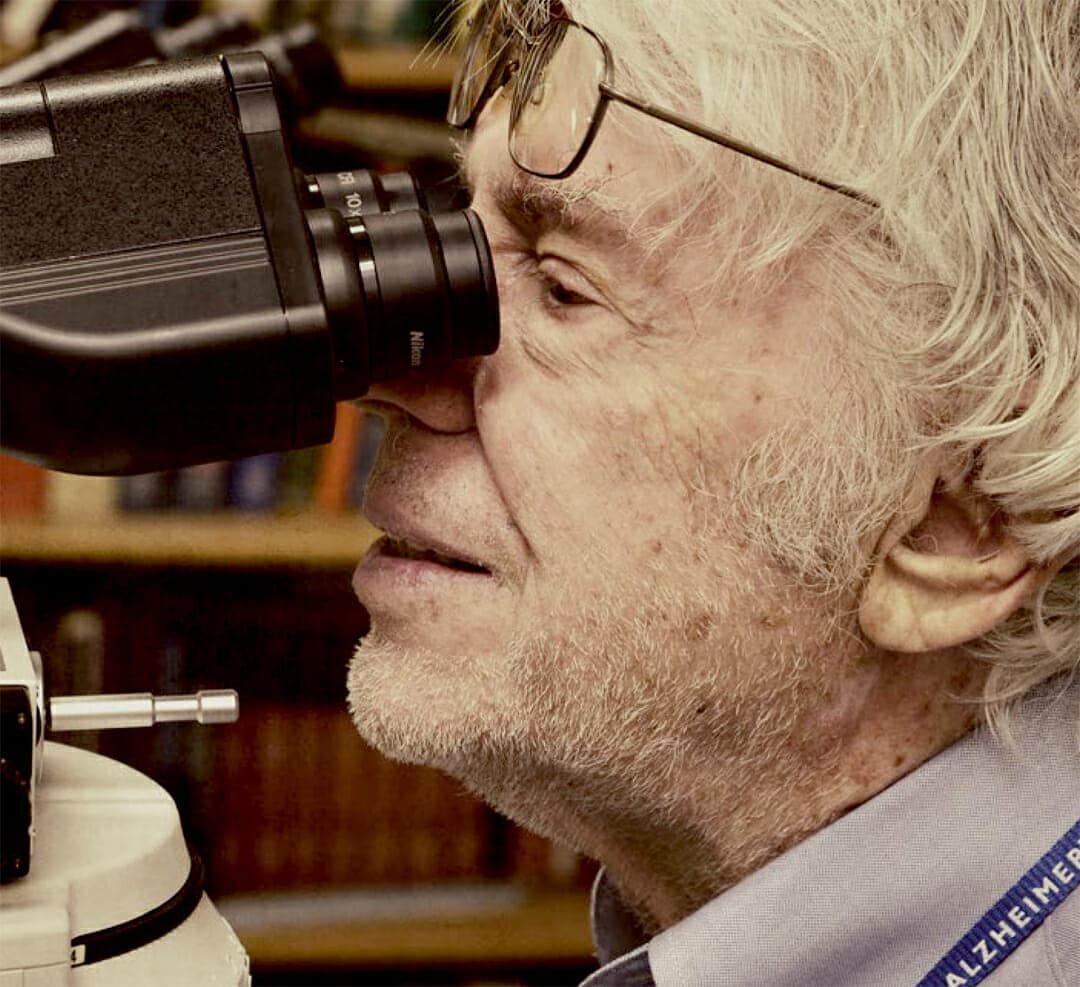

For many years, the brain was thought to only contain one cortical field related to movement. It was Alfred Walter Campbell, better known in history as Australia’s first neurologist, who studied the cortex under a microscope and from its unusual architecture determined that there might be two fields responsible for movement — a primary and a central intermediate. Today, as our methods have advanced into what many hail as the golden age of neuroscience — we’ve moved on to computer models and functional MRI scanners to monitor brain activity throughout the motor cortex when dealing with movement.
In one such experiment conducted by the University of Pittsburgh, test subjects were placed in a virtual reality setting, where they performed tasks in both 2-D and 3-D layouts. Their brains adjusted to the new maps accordingly as they were introduced to each environment, as signaled by the motor-cortical neurons.
There’s a pretty good incentive for understanding what’s going on inside the motor cortex, too. As researcher Steven Chase, assistant professor at the Center for Neural Basis of Cognition, explains: “Our brain has an amazing ability to optimize its own information processing by changing how individual neurons represent the world. If we can understand this process as it applies to movements, we can design more precise neural prostheses.”
In the near future, for example, robotic arms could be constructed to closely model the intended movement of the patient, based on a closer understanding of how their motor cortex functions while moving — aiding in the manufacturing of artificial parts that you might almost feel you were born with.
Yet, researchers are already exploring a future of possibilities that goes far beyond artificial limbs. In spring 2017, Facebook revealed a technology that would allow people to transmit messages from their brains at up to 100 words per minute — using a brain-to-computer interface. The technology may not sound like reality, but in fact has its roots in a Stanford-based research effort that placed electrode arrays in a patient’s brain to record signals transmitted by the motor cortex — allowing persons with paralysis to type out words.
Describing his hope for the near future, Facebook CEO Mark Zuckerberg posted: “Our brains produce enough data to stream four high-definition movies every second. The problem is that the best way we have to get information out into the world — speech — can only transmit about the same amount of data as a 1980s modem.”
You might fear the unthinkable — but Facebook’s intent is to develop a noninvasive system for transmitting speech, one that would not record our random thoughts, but that could be used as a type of speech prosthetic; the ultimate evolution of speech turned into texting. The human brain streams its data at the rate of 1 terabit per second, while basic speech is transmitted at the rate of 40 to 60 bits per second.
And Facebook is hardly the only interested party. Elon Musk launched the company Neuralink to further explore electrode-array technology and is hoping to one day merge our minds with the machine. It’s still a long way off — but as the technology advances, so could a myriad cures for neurological and neurodegenerative disorders.
This article was originally published in the Summer 2017 issue of Brain World Magazine.
Related Articles
- Know Your Brain: Basal Ganglia — The Cerebral Connection
- Know Your Brain: The Gustatory Cortex — How Taste Works
- Know Your Brain: Superior Temporal Sulcus — Channeling The “Social Brain”
- Road Map of the Mind: Understanding Functional MRI
- Stir Of Echoes: Learning Echolocation
- Two Left Feet? You Might Be Gliding Without Enough GABA